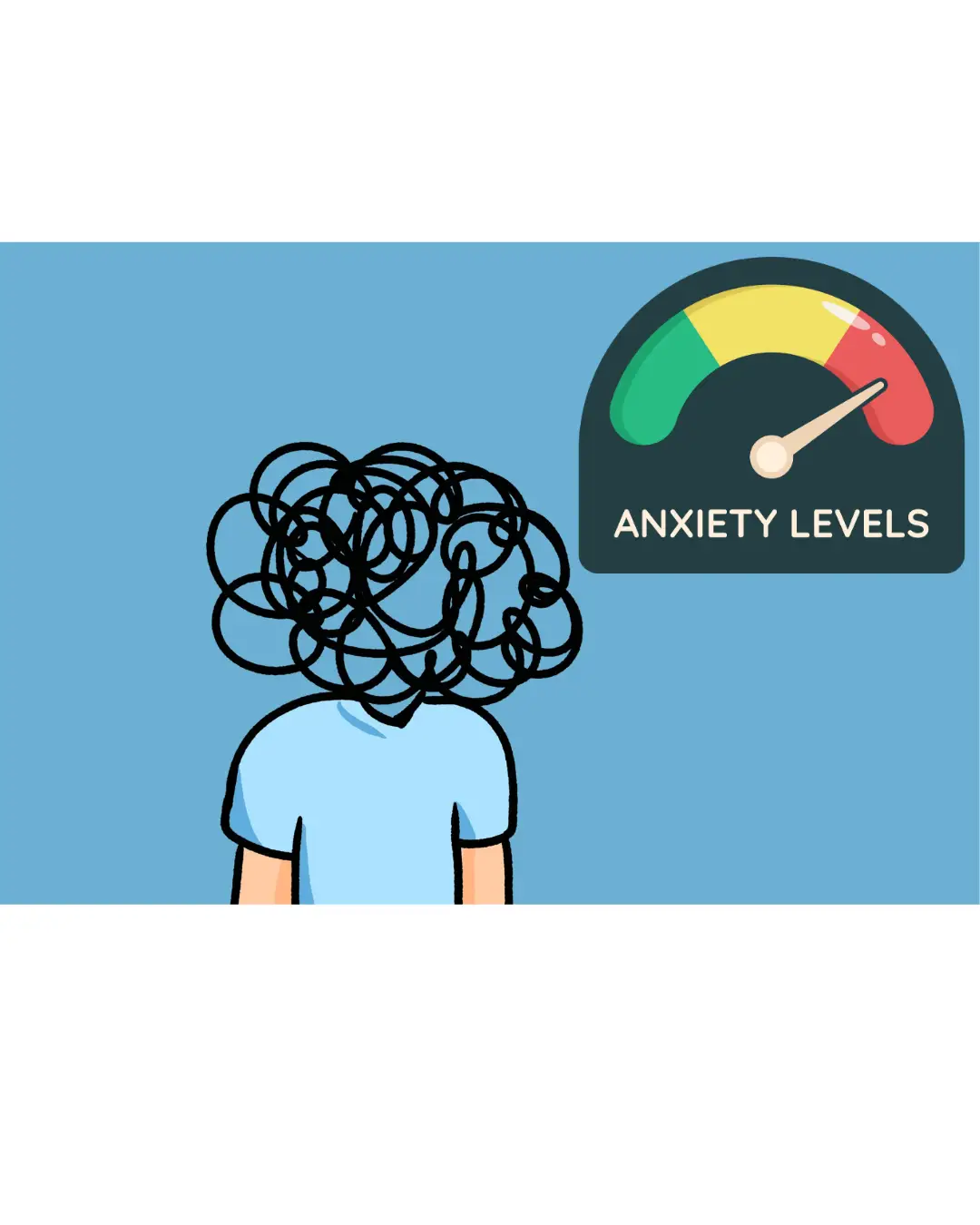
When anxiety spikes, it rarely does so politely. It builds, loops, and spirals—pulling your thoughts into worst-case scenarios, your body into tension, and your attention far, far away from the present moment. In those moments, logic alone usually doesn’t cut it. That’s where an anxiety kit comes in.
An anxiety kit is a personalized stash of sensory tools and tiny emotional support sidekicks designed to interrupt full-blown freak-outs (or, maybe a totally average Monday morning) and guide you back to something resembling calm. Think of it as a little bridge between “everything is too much” and “okay, I’ve got this”—helping you make space for your thoughts and feelings without handing them the microphone and a full TED Talk.
Why Anxiety Spirals Are So Hard to Stop
Anxiety spirals are basically a chaotic duet between your brain and your body. You’ve got cognitive loops (hello, rumination and the “what if” olympics) teaming up with physiological activation (racing heart, shallow breathing, muscles clenched like you’re bracing for impact). Once they’re both online, they hype each other up like it’s their full-time job:
Thoughts spark body sensations
Body sensations go, “See?! Something’s wrong!”
And suddenly… we’re off to the races—no warm-up, no consent
An anxiety kit steps in like a friendly bouncer and breaks up the party—especially through the body and senses, which are regulation superstars that bring you back to the present. It helps you interrupt the loop before it completely takes you out.
The Power of Sensory Interruption
A lot of anxiety kit items are intentionally sensory-based—and for good reason. Strong sensory input can basically steal the spotlight from anxious thoughts and give your attention something way more interesting to latch onto. Think of it as a friendly little distraction with benefits: your brain goes, “Ooh, sour candy!” and your anxiety gets bumped out of center stage.
Examples:
- Sour candy: The intense taste pulls you straight into the present moment. It’s hard to stay deep in a spiral while your face is reacting to sourness.
- Break-away ice packs or cold items: Cold exposure can trigger a calming reflex in the nervous system, helping slow heart rate and reduce panic intensity.
- Essential oils: Smell is directly connected to the brain’s emotional center. A familiar, calming scent can cue safety surprisingly fast.
- Mindfulness candy (like chocolate): Slowly tasting something pleasant anchors you in the present—texture, flavor, temperature—rather than runaway thoughts.
These tools don’t “solve” anxiety—but they do interrupt its dramatic little spiral, which is often the most important step.
Grounding Through Movement and Touch
When anxiety builds, the energy doesn’t just disappear—it gets stuck and starts pacing. Movement-based and tactile tools give it somewhere to go that isn’t your thoughts.
- Fidget toys or putty: Keeps your hands busy and your brain a little quieter
- Coloring books: Just enough focus to shift attention without overwhelm
- Textured objects: Soft, weighted, or soothing items can create a sense of physical comfort
These are especially helpful if anxiety makes you feel restless, keyed up, or like you might crawl out of your own skin.
Don’t Forget the Most Portable Tool: Your Breath
One of the most important (and often overlooked) items in an anxiety kit is a breathing reminder. Because damned if we don’t completely forget that our breath is sitting right there, ready to regulate us—if we actually use it on purpose. You don’t need to pack your breath in your kit, but you do need something that cuts through the chaos and reminds you: hey, breathe like you mean it, fucker!
Consider including:
- A small card with a simple breathing pattern (inhale 4, hold 4, exhale 8) or a reminder to breathe a certain way (through pursed lips, like you’re trying to fog a mirror, etc.)
- A visual cue (like a sticker, symbol, or calming image)
- A mantra: “Just Breathe” or “Breathe Through It”
When anxiety spikes, breathing often becomes shallow and fast, which signals danger to the body. Slowing your breath—especially the exhale—helps activate the parasympathetic nervous system, telling your body it can begin to ‘simmer down now’.
Try this in the moment:
- Inhale through your nose for 4
- Exhale slowly through your mouth for 6–8
- Repeat for 1–2 minutes
In case your brain needs a side quest: Pairing breath with another item (like holding an ice pack or fidget) can make it easier to stay engaged.
Use Mantras as Grounding Statements
You knew this was coming—Sticky Note Mantras! Grab a pen and jot down a few grounding mantras on sticky notes to gently upgrade your inner dialogue. Instead of getting swept up in anxious thoughts, you get to talk back (with a little more wisdom and sass).
Think of these as tiny but mighty mental anchors—aka pattern interrupts—you can toss into your anxiety kit, stick on your mirror, or stash in your phone for those “not today, anxiety” moments.
Some favorites:
- “This feels urgent, but it’s not dangerous.”
- “I can feel this and still be okay.”
- “Thoughts are not facts.”
- “I don’t have to solve this right now.”
- “Let me come back to what’s actually happening.”
And a few more to round it out:
- “I see you, feelings and thoughts! Now get in the backseat. I’m driving.”
- “Anxiety, please leave a message, I’m not available for this nonsense right now.”
- “My breath is always with me and can calm me.”
The tone matters here. Some people need compassionate, soothing language. Others need something a little more direct, like a slap in the face. Both are valid. The goal is to find statements that actually land for you in the moment.
Pairing a mantra with a sensory tool (like sour candy or a cold pack) or with your breath can make it even more effective—engaging both mind and body at the same time.
Externalizing Your Inner Dialogue
One of the most powerful (and honestly underrated) parts of an anxiety kit is symbolic representation.
Using little objects—like stuffed animals, squishy stress buddies, or random figurines—to represent different parts of you can create just enough space from those overwhelming thoughts. And yes, you have full permission to have way too much fun picking them out!.
Meet the cast:
The Inner Critic – dramatic, judgy, loves a good catastrophe
The Wise Counselor – grounded, compassionate, and not here for the nonsense
When anxiety kicks up, you can literally hold the “wise” one and ask, “Okay… what would this version of me say right now?”
It’s a simple shift, but a powerful one:
this is a part of me talking… not the CEO of my entire brain.
Why Personalization Matters
An effective anxiety kit is not one-size-fits-all (WTF, there is no “grab this and be instantly cured” version?).
The goal is to build something that feels:
- Accessible (easy to reach when things go sideways)
- Engaging (you’ll actually use it—not just admire it)
- Meaningful (it resonates with you, not just Instagram)
The Deeper Benefit: Building Self-Trust
At its core, an anxiety kit isn’t just about symptom relief. It’s about relationship—the one you’re actively building with yourself in those moments when your brain decides it’s time to spiral like it’s getting paid per worst-case scenario.
Because every time you reach for your kit, you’re quietly proving to yourself:
- “I can respond to my anxiety instead of getting completely derailed by it.”
- “I don’t have to treat every dramatic thought my brain produces like breaking news.”
- “I actually have options here. Even if my brain is insisting I absolutely do not.”
And over time, that builds something really important: self-trust.
Not the loud, overly inspirational kind. The quieter kind. The kind that says: “Even when my brain is going rogue, I can still have my own back.”
And honestly? That kind of trust is wildly stabilizing.
Final Thoughts
Anxiety loooooooves momentum. If it gets going, it will absolutely try to turn your nervous system into a runaway train with no brakes, no itinerary, and a very confident but unqualified conductor.
An anxiety kit helps you interrupt that momentum—not by going to war with your anxiety, but by making space for it, trusting yourself, and gently grounding back into the present moment.
Through your senses. Through your body. Through reminding yourself that, despite what your brain is screaming, you are not actually trapped in a psychological escape room with no exit clues.
The most powerful tool in the kit isn’t something you physically hold—it’s something you learn to access internally.
Eventually, you don’t just use the kit… you become the kit.
Which sounds intense, but really just means: you start remembering you’re allowed to breathe, pause, interrupt the spiral, and not take every anxious thought as gospel truth.
And that’s where things really start to shift!