Sticky Note Mantra:
You don’t have to solve every “what if.”
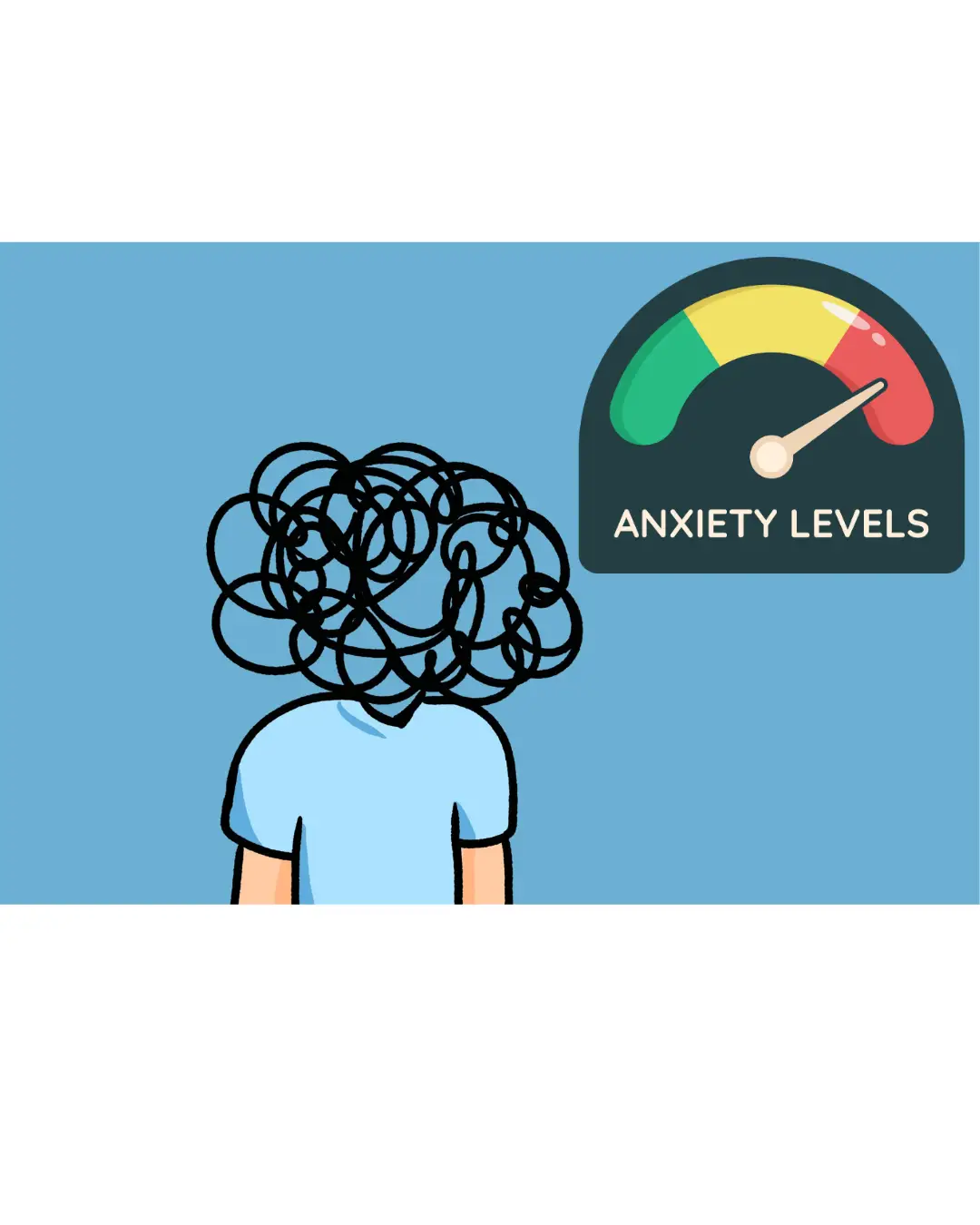
For most of us, anxiety has a pretty useful job.
Something feels dangerous → your brain sounds the alarm → you respond → the danger passes → the alarm quiets down.
Done. Crisis averted. Everybody go home.
But OCD?
OCD is the coworker who keeps sending you emails after the meeting is over.
“Just one more thing…”
With OCD, it’s as if the brain’s anxiety valve gets stuck open.
The danger may be gone.
Nothing bad may have happened.
You may even know rationally that everything is okay.
But your brain is still saying:
“Yeah, but…are we sure?”
And suddenly you’re holding a full-blown emergency meeting with yourself at 2:00 a.m. about something that happened three years ago.
The OCD brain has trouble letting the alarm turn off.
OCD often makes the world feel riskier than it actually is.
An intrusive thought pops into your mind:
What if I hurt someone?
What if I contaminated something?
What if I made a terrible mistake?
What if I don’t really love my partner?
What if I’m responsible for something bad happening?
The thought itself isn’t the problem.
It’s the meaning OCD attaches to the thought.
“What if I had that thought because I secretly want it?”
“What if having this thought means something terrible about me?”
“What if I’m responsible for preventing something bad?”
Suddenly, your brain has taken a random thought and promoted it to BREAKING NEWS.
And once the brain perceives a threat, it wants answers.
Preferably immediately.
Preferably 100% certain.
And preferably with a signed affidavit.
Enter: the compulsion.
The brain says:
“DO SOMETHING.”
Check.
Google.
Ask for reassurance.
Replay the conversation.
Analyze your feelings.
Avoid the situation.
Confess.
Check again.
Maybe check one more time just to be safe.
And when you do?
Ahhhhh.
Relief.
For a little while, anyway.
And that relief is exactly what keeps the OCD cycle going.
Your brain learns:
“Excellent work. The checking worked! Nothing bad happened!”
Never mind that nothing bad was probably going to happen anyway.
Your brain doesn’t care.
It has connected the dots.
Thought → Anxiety → Compulsion → Relief
And now it has a new favorite hobby.
Repeat.
This is how the hole gets deeper.
Imagine you’re standing in a hole.
OCD says:
“We need to get out of this hole!”
So you dig.
You feel better for a minute because you’ve done something.
But then OCD says:
“Hmm. We should probably dig a little more just to make sure.”
So you dig.
And dig.
And dig.
Eventually you’re thinking:
“Why am I six feet underground?”
Because the very thing you were doing to feel safer was teaching your brain that you needed to feel safer.
That’s the trap.
The compulsion provides short-term relief but keeps the long-term problem alive.
And then there’s doubt.
Oh, doubt.
OCD’s favorite seasoning.
Doubt is one of OCD’s favorite weapons because OCD rarely says:
“Something terrible definitely happened.”
Instead, it says:
“But what if?”
And what if is a question that can generate approximately 47,000 follow-up questions.
In fact, the French once referred to OCD as folie du doute—“the madness of doubt.”
And that’s exactly what it can feel like.
The more serious the possible consequence feels, the more certainty your brain demands.
If the stakes feel high enough, “probably” isn’t good enough.
99.9% certain? Nope.
Your OCD brain wants the remaining 0.1%.
Good luck with that.
Because life doesn’t come with a Certainty Department.
OCD wants black and white.
Life keeps handing us gray.
OCD says:
“Know for sure.”
Recovery says:
“I can handle not knowing.”
OCD says:
“Make the anxiety go away.”
Recovery says:
“I can feel anxious without obeying the anxiety.”
OCD says:
“What if something bad happens?”
Recovery says:
“Maybe. Maybe not. I’m not going to spend the next three hours trying to solve that.”
OCD says:
“But what if you’re making a terrible mistake by not figuring this out?”
Recovery says:
“Thanks, OCD. I’ve heard enough from you today.”
The goal isn’t certainty.
This is one of the hardest—and most freeing—parts of OCD recovery:
The goal isn’t to become 100% certain.
The goal is to stop treating uncertainty like an emergency.
You don’t have to prove the thought is false.
You don’t have to make the anxiety disappear.
You don’t have to perform the perfect compulsion.
You don’t have to investigate every possibility like you’re starring in your own episode of CSI: My Brain.
You can notice the thought.
Notice the anxiety.
Notice the urge to do something about it.
And then…
choose not to play.
Because every time you resist the urge to solve, check, reassure, avoid, analyze, or neutralize, you’re teaching your brain something new:
“I can have uncertainty and still be okay.”
Sticky Note Mantra:
I don’t need certainty to move forward.
OCD may keep asking questions.
It may demand answers.
It may send follow-up emails.
It may even cc everyone in your nervous system.
You don’t have to respond.
Sometimes recovery looks like saying:
“Maybe. Maybe not. I’m going to live my life anyway.”
And honestly?
That’s a pretty powerful answer.